
Dartmoor walks after rain: how to plan a safer family day

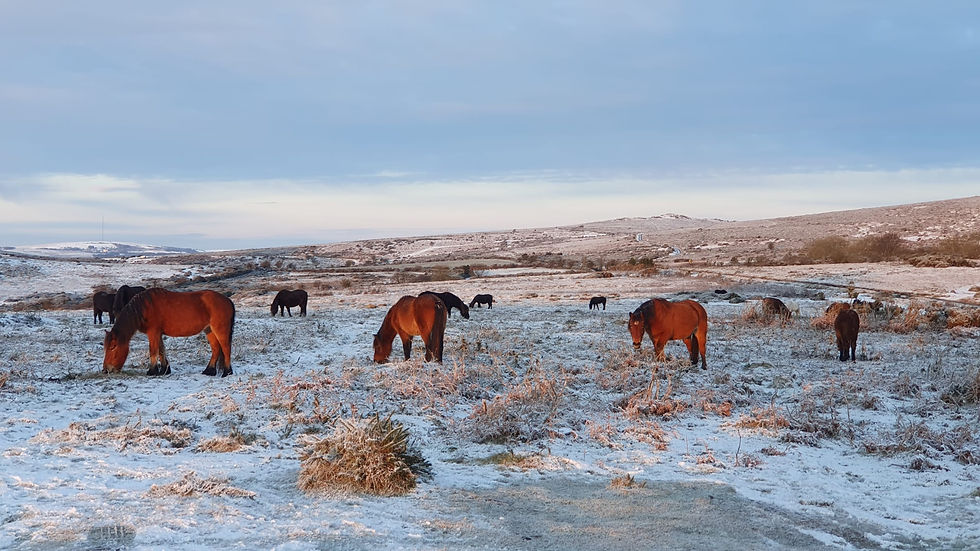
Dartmoor walks after rain can still be brilliant family days out. But the short route you enjoyed last month might feel completely different after a wet week. A stream becomes a proper obstacle, a grassy shortcut turns into a squelchy detour, and the children discover exactly how much water a boot can hold.
We don't think every grey forecast means staying indoors. We do think the route should fit the conditions, not just the distance on the map. Here's how we'd make that decision before leaving home.
Check what the rain has done, not just today's forecast
A dry morning doesn't necessarily mean dry ground. Water can remain on moorland tracks and in low-lying areas long after the rain stops. Dartmoor National Park Authority warns that the moor can be very wet and boggy, and that rivers may rise rapidly after heavy rain. Its outdoor safety advice is worth reading before a wet-weather trip.
Check the Met Office forecast for your intended area, including wind, temperature and visibility, then look back at recent rainfall. If you're planning to go near a river, use the Environment Agency's Check for Flooding service to look at local alerts and available river-level information. A forecast or river gauge cannot certify that an individual crossing is safe.
Choose the ground before choosing the distance
On a damp day, the surface underfoot can matter more than whether the route is 2km or 4km. A short walk over exposed, uneven or waterlogged ground can be harder work than a longer outing on a clear, well-defined track. That's especially true when you're carrying a little one or trying to keep a group moving together.
Look for woodland paths, firm tracks and simple out-and-back options where you can change your mind without committing to a remote circuit. Our free Dartmoor walks map lets you compare distances, terrain and difficulty before settling on a plan. The route descriptions are a starting point, though, not a live report on today's surface conditions.
Treat stepping stones and streams differently after rain
A stream that was ankle-deep on your last visit might be faster, deeper or much harder to judge today. Slippery rocks and submerged stepping stones are not worth testing with children. The National Park's advice is clear: never try to cross a river in spate.

If a planned crossing looks questionable, turn around or use a genuinely safe alternative already on your route plan. Don't improvise a crossing further upstream, and don't assume a photograph of the walk tells you what the water will be doing when you arrive. The best adventure is the one everyone gets home from comfortably.
Give yourself a proper Plan B
Before setting off, choose one shorter or lower-level alternative and decide what would make you switch. It might be heavy rain continuing, low cloud hiding landmarks, an unexpectedly flooded path or simply children who are colder than expected. You don't need to make the call dramatic. 'Shall we try somewhere else?' is a perfectly good family walking skill.
For example, our Yarner Wood free walk guide describes a woodland setting with established tracks. That makes it useful to compare against an exposed moorland route, but it does not mean every part will be dry or suitable after a storm. Check local notices and actual conditions first.
Pack for standing still as well as walking
Children rarely walk continuously. They stop for sticks, interesting stones and important conversations with puddles. Add a warm layer, waterproofs, spare socks and something dry to change into afterwards. Keep snacks and a drink handy, and allow time for the journey back before the light fades.
Take a charged phone and an offline map or suitable navigation backup. Tell someone your planned area and expected return time. In poor visibility, don't rely on a phone signal or a single app to navigate unfamiliar open moorland. For questions about GPS, terrain and choosing the right difficulty, our Dartmoor walking FAQs explain how our route information works.
Know when the sensible choice is to turn back
There isn't a magic rainfall number that makes every Dartmoor path unsafe. Conditions vary between valleys, tracks, tors and streams. The signs that matter are what you can actually see: fast water, ground you cannot confidently cross, deteriorating visibility, rising wind or a child getting cold.
We'd rather have a happy 20-minute wander and a warm drink afterwards than force a planned loop because we'd driven all that way. Dartmoor isn't going anywhere. Choose the walk that works today, and save the more adventurous one for a better window.


Comments